
The same technology to protect movies, music and books could soon be coming to your images. The Joint Photographic Experts Group (JPEG) recently announced an initiative that may one day bring digital rights management (DRM) to the most common image format in the world.
While the concept is still in discussion and no actual changes to the JPEG format have been announced, the proposed change could potentially protect EFIX and metadata but also prevent you from copying or even opening images. Imagine not being able to repost images on social media or in blogs on the web. Imagine all the memes we would be without!
The proposed actions have some people quite upset, especially fair use rights supporters. The proposal of DRM on a photo could make it difficult for news organization, education and others to use images.
This caught the attention of the Electronic Frontier Foundation (EFF) who sent representatives to Brussels where the JPEG meeting was taking place. They argue DRM does not in fact work and would inhibit, again, fair use.
“We warn against any attempt to use the file format itself to enforce the privacy or security restrictions that its metadata describes, by locking up the image or limiting the operations that can be performed on it,” the EFF wrote.
Now is DRM JPEGs a good or bad thing? I'm not a privacy expert so I don't have the answers. But imposing this kind of content management on the world's most popular image format doesn't seem like a good idea. As photographers, we all deal with protecting our images with how easy the Internet has made it to copy and repost work without attribution. The option could be available to a accepted format for sensitive information, but opening up the floodgates to suddenly make anyone with Photoshop a license manager isn't what I had in mind.
Should all JPEGs be copy-protected? Or are there better ways? How are you protecting your images?




 Cable length - Always round up when estimating connection distances. It’s better to have a bit too much cable than to come up short.
 25 to 100 feet - If you need to send a 1080p signal more than 25 feet, or a 1080i signal more than 49 feet, active electronics will help boost the HDMI signal to compensate. You can purchase either a stand-alone booster box or an active cable, where the circuitry is embedded in the connectors themselves. Both types require an external power source.
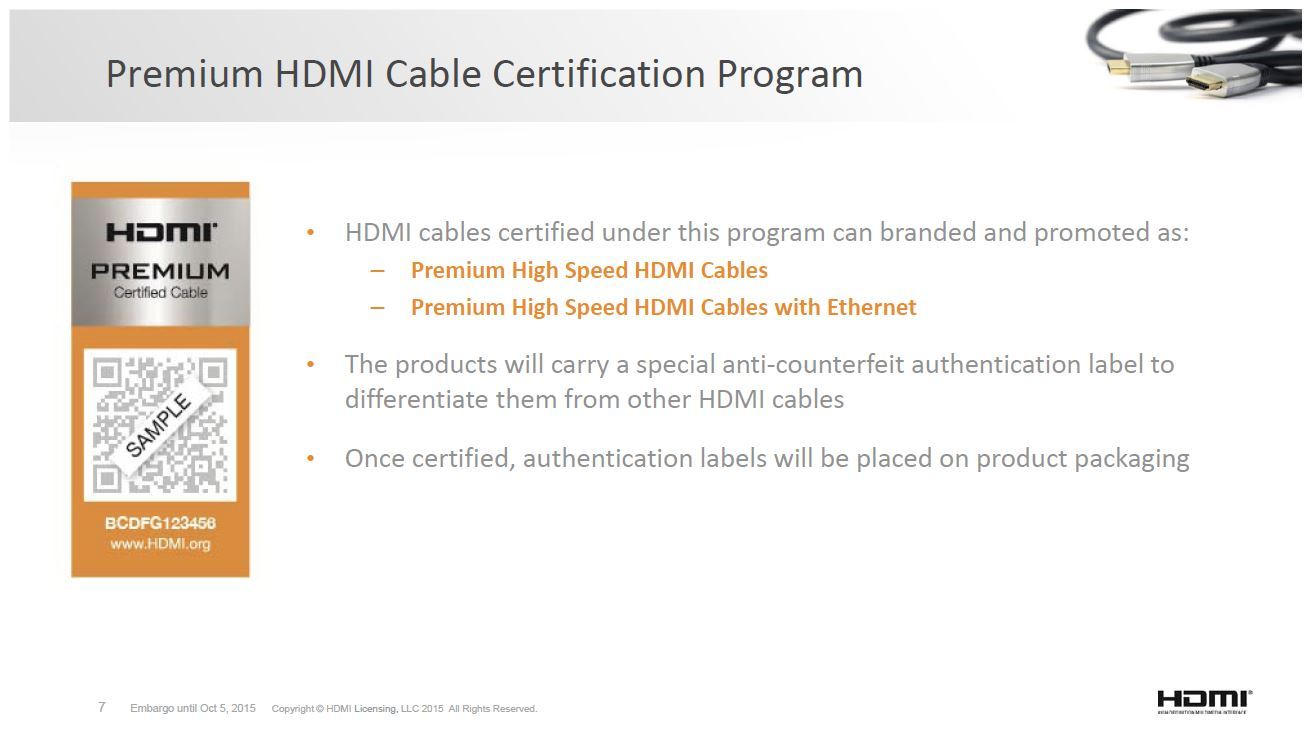
 Make sure you are buying genuine HDMI products from Licensed Adopters or HDMI Associates.
 HDMI ports on your equipment are always "female,"